
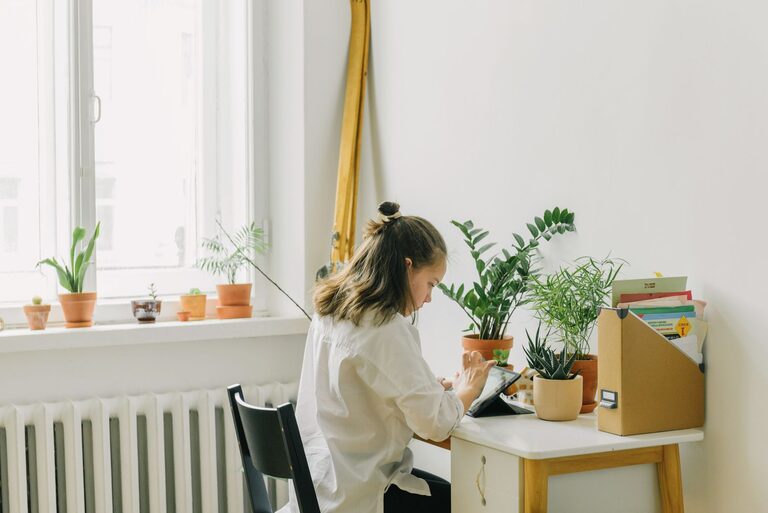
Creating a comfortable and productive home office space is essential, especially as more people continue to work remotely or freelance from home. A well-designed workspace can improve focus, reduce stress, and help separate your work life from your personal life. Whether you have a dedicated room or just a small corner, these tips will help you create an environment that encourages productivity and comfort.
1. Choose the Right Location
Selecting the right spot for your home office is the first step toward creating a productive workspace.
Consider Natural Light
Try to position your desk near a window. Natural light boosts mood and energy, helping you stay alert throughout the day. However, be mindful of glare on your computer screen. If direct sunlight is too harsh, using light-filtering curtains or blinds can help.
Minimize Distractions
Choose a location away from high-traffic areas like the kitchen or living room. A quiet corner or spare room can help you focus better by reducing noise and interruptions.
2. Invest in Ergonomic Furniture
Comfort is crucial when you spend long hours working at a desk.
Desk and Chair
Select a desk with enough surface space for your computer, notes, and other essentials. An adjustable chair that supports your lower back encourages good posture and reduces fatigue. Look for chairs with padding and adjustable height and armrests.
Monitor and Keyboard Setup
Position your monitor at eye level to avoid neck strain. Keeping your keyboard and mouse at a comfortable height prevents wrist discomfort. Ergonomic accessories like wrist rests and footrests can add extra comfort.
3. Organize Your Workspace
A clutter-free desk helps clear your mind and improves efficiency.
Storage Solutions
Use shelves, filing cabinets, or storage bins to keep documents and office supplies organized. Consider vertical storage to save floor space.
Cable Management
Tidy cables with clips or sleeves to avoid tangles and keep your desk looking neat. This also prevents accidents and makes cleaning easier.
4. Personalize Your Space
Adding personal touches can make your home office feel more inviting and motivating.
Decor Elements
Incorporate plants, artwork, or photos that inspire you. Indoor plants not only add color but also improve air quality.
Color Choices
Choose calming colors like blues or greens for walls and accessories. These hues can reduce stress and enhance concentration.
5. Optimize Lighting
Good lighting reduces eye strain and keeps you energized.
Layered Lighting
Use a combination of natural, overhead, and task lighting. A desk lamp with adjustable brightness helps when working late or on detailed projects.
Avoid Glare
Position lights to prevent reflections on your screen or workspace. Matte surfaces can help minimize glare as well.
6. Maintain Proper Ventilation and Temperature
Comfort includes controlling the air quality and temperature in your workspace.
Airflow
Keep a window open when possible or use a fan to circulate fresh air. Good ventilation reduces fatigue and boosts concentration.
Temperature Control
Use a heater or air conditioner to maintain a comfortable temperature. Dress in layers to stay adaptable throughout the day.
7. Establish Boundaries for Work and Life
Clearly defining your work area helps maintain a healthy balance.
Work Hours
Set firm start and stop times for your workday. This prevents burnout and allows you to enjoy your free time.
Physical Boundaries
Close the door or use room dividers to separate your office from living areas, signaling to yourself and others that you’re in work mode.
8. Incorporate Technology Wisely
Technology can enhance productivity but also distract if unmanaged.
Essential Tools
Invest in a reliable computer, quality headset for calls, and a fast internet connection.
Minimize Distractions
Use apps or browser extensions to block distracting websites during work hours. Keep your phone on silent or in another room if possible.
9. Take Regular Breaks
Finally, remember that breaks are part of staying productive.
Follow Timed Breaks
Try techniques like the Pomodoro method — work for 25 minutes, then take a 5-minute break. Stand up, stretch, or walk during breaks to reduce fatigue.
Move Around
Incorporate light exercise or stretches to keep your body active and energized.
—
By following these tips, you can create a home office that supports your work habits and personal comfort. A well-planned space not only boosts productivity but also helps you maintain a positive and focused mindset throughout your workday. Whether you’re working full-time from home or occasionally, investing time in your workspace setup can have lasting benefits.